

Asphalt Costs Rise 7.1%, Impacting California Commercial Pavement Budgets
Denny McCowan General Engineering Inc. provides data-driven pavement management and civil engineering solutions designed to optimize asset longevity.
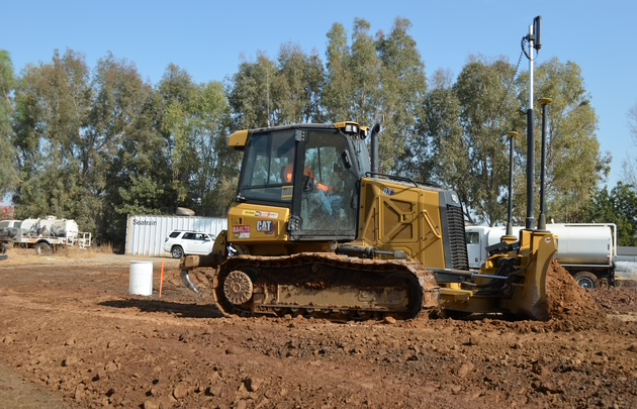
Denny McCowan General Engineering utilizes advanced automated machine control technology to ensure precision in heavy excavation and site preparation projects.
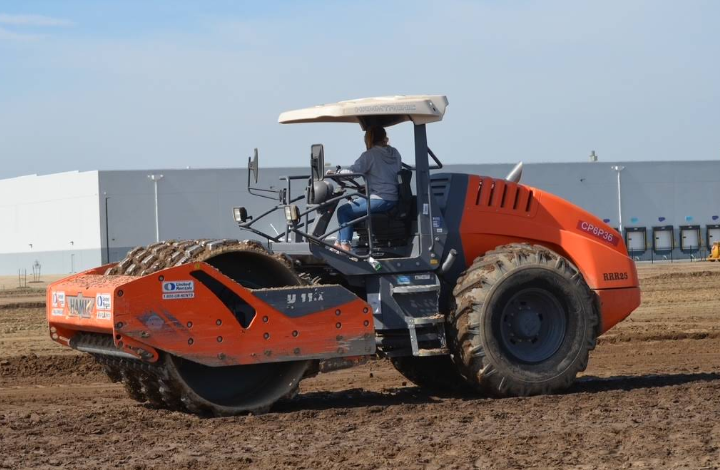
Precision soil compaction is a vital phase in sub-base preparation, providing the necessary structural integrity for long-lasting commercial pavement systems.
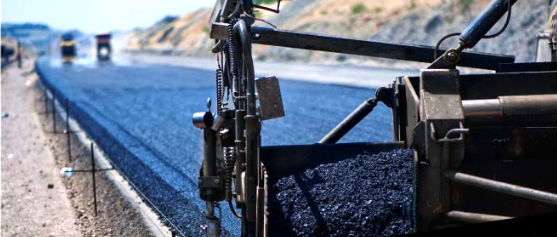
High-capacity asphalt paving operations require precision engineering to ensure long-term durability against heavy-axle freight and thermal stress.
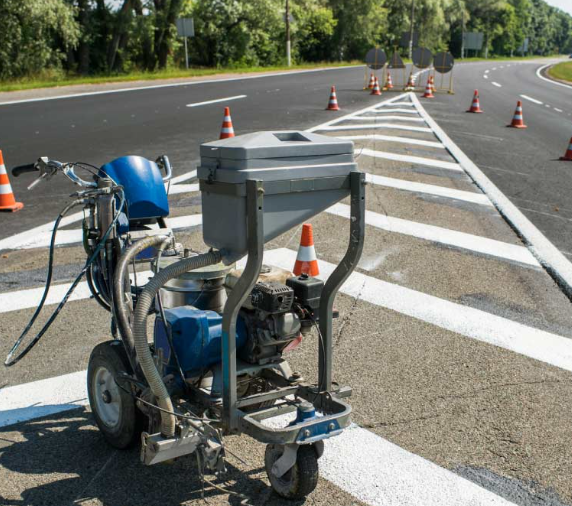
Precision striping and pavement marking are essential components of comprehensive pavement maintenance, ensuring safety and compliance in industrial and commercial zones.
Asphalt costs rose 7.1%, threatening commercial budgets. Delaying maintenance now risks fourfold increases in future reconstruction costs.
VISALIA, CA, UNITED STATES, July 8, 2026 /EINPresswire.com/ -- Macroeconomic Supply Squeeze on Bituminous Binders and Aggregates Forces Commercial Asset Managers into Compounding Sub-Base Liabilities Across California's Logistics Corridors.
The Material Spike: Driven by sustained federal and state infrastructure capital allocations, the Producer Price Index (PPI) for asphalt paving mixtures and structural aggregates has climbed an estimated 7.1%, squeezing private commercial budgets.
The Maintenance Trap: Postponing minor surface rehabilitation measures under inflationary pressures accelerates deep water intrusion, multiplying structural remediation costs up to fourfold when complete sub-base reconstruction becomes inevitable.
The Regional Strain: In the Central Valley's logistics and transit hubs, extreme thermal variations combined with heavy-axle agricultural and freight traffic are shortening pavement lifecycles, catching asset management funds unprepared.
THE MACROECONOMIC SQUEEZE: PUBLIC CAPITAL VS. PRIVATE MAINTENANCE
The commercial real estate, industrial logistics, and retail asset management sectors are facing a quiet but severe capital allocation crisis driven by a structural supply-demand mismatch in raw civil construction materials. Data analyzed from the U.S. Bureau of Labor Statistics (BLS) Producer Price Index (PPI) indicates that the cost of asphalt paving mixtures, bituminous binders, and structural aggregates has experienced an 7.1% inflationary escalation. This pricing surge is primarily fueled by heavy public sector infrastructure demand, as capital from the federal Infrastructure Investment and Jobs Act (IIJA) and California’s Senate Bill 1 (SB 1) transport funds continues to aggressively absorb regional refining and quarry capacities.
Because municipal highways, public rights-of-way, and large-scale state transit initiatives operate under long-term, indexed public funding, public works projects can absorb fluctuating material inputs more resiliently than private commercial budgets. This dynamic leaves private asset managers competing for remaining regional hot-mix asphalt (HMA) allocations. Faced with higher contractor bids for routine parking lot rehabilitations, many commercial property owners and industrial park operators are choosing to defer pavement maintenance schedules—a strategic delay that civil engineers warn creates a compounding financial liability.
THE PHYSICS OF FAILURE: THE HIDDEN COST OF DEFERRED CIVIL ENGINEERING
Pavement asset management operates on a predictable, highly non-linear degradation curve. For the first several years of a parking facility or industrial staging area’s operational life, structural decline is virtually invisible to the untrained eye. However, asphalt is an organic, petroleum-based composite material highly susceptible to environmental oxidation and UV-driven binder embrittlement. When surface-level micro-cracks form, they present an immediate pathway for moisture to bypass the impervious top layer.
Once water infiltrates the underlying aggregate sub-base, the structural load-bearing capacity of the pavement system collapses. Under the repetitive mechanical stress of vehicular traffic, the saturated sub-base shifts, leading to "alligator cracking"—a interconnected network of fractures indicating total structural failure—followed by rapid pothole formation and deep sub-grade pumping.
Data from the Federal Highway Administration (FHWA) National Highway Construction Cost Index (NHCCI) confirms that while preventative surface engineering (such as crack sealing, mastic fills, and thin-lift asphalt overlays) requires a relatively modest capital outlay, complete sub-base reconstruction driven by structural water damage can cost up to four times more per square foot. By delaying surface maintenance due to short-term inflationary concerns, asset managers are inadvertently locking themselves into exponentially higher capital expenditures within a multi-year window.
LOCALIZATION: THE CENTRAL VALLEY LOGISTICS AND THERMAL BOTTLENECK
While pavement degradation affects assets nationwide, the physical and economic consequences are uniquely magnified within California’s Central Valley, specifically across the industrial and commercial hubs of Visalia, Tulare, and Fresno. The region serves as a vital logistics corridor, where vast industrial fulfillment centers, cold-storage facilities, and agricultural processing hubs operate continuously.
These facilities are subject to two distinct, compounding destructive forces:
Heavy-Axle Freight Loading: Pavement structures designed for standard commercial vehicle weights are regularly subjected to high-axle-load agricultural transport and Class 8 freight trucks, accelerating mechanical fatigue.
Extreme Thermal Fluctuations: The Central Valley experiences intense summer heat profiles, with ambient temperatures routinely exceeding 100°F (38°C), pushing asphalt surface temperatures far higher. Under these conditions, the bituminous binder softens, making the pavement highly susceptible to rutting and structural deformation under heavy loads.
When these extreme thermal loads are followed by seasonal winter precipitation events, unsealed surface cracks act as funnels, saturating the clay-heavy soils characteristic of the Valley floor. The resulting sub-base instability forces property managers to confront immediate operational liabilities, as compromised pavement zones can disrupt logistical supply chains, damage material handling equipment, and introduce substantial premises liability claims.
PROBLEMS, AGITATION, AND STRATEGIC REMEDIATION
The combination of material price inflation and accelerated physical asset degradation has caught many commercial asset management funds off guard. Budgets formulated under historic baseline assumptions are proving inadequate to cover current bid realities. Property managers who continue to prioritize cosmetic interior improvements while deferring structural exterior engineering run the risk of facing abrupt capital calls when regional building inspectors or risk-management auditors declare transit surfaces unsafe or non-compliant.
To mitigate this exposure, sophisticated property owners are transitioning from reactive maintenance models to highly technical Pavement Management Programs (PMPs). These programs leverage precise site inspections to map distress patterns and prioritize interventions before the underlying aggregate base becomes compromised.
Expert Field Perspective
Navigating this challenging capital environment requires localized, practical field insight. Civil engineering experts note that understanding asphalt as a structural system, rather than an aesthetic amenity, is fundamental to preserving commercial real estate valuations.
"Many commercial asset managers view asphalt as a cosmetic concern rather than a highly engineered structural system," stated Denny McCowan, a third-generation contractor at Denny McCowan General Engineering Inc., based in Visalia, California. "With raw material inflation continuing to climb, ignoring minor pavement cracking allows water to rapidly compromise the underlying aggregate sub-base. Once that structural base fails, the remediation requires deep, heavy excavation rather than a standard overlay, multiplying project costs at a time when capital is already expensive."
Engineering professionals emphasize that the choice of rehabilitation technique must match the specific distress profile of the asset to prevent wasted capital on improperly applied surface treatments.
"Applying a standard sealcoat over an area that is already showing extensive alligator cracking is essentially pouring money down the drain," McCowan added. "If the sub-base has already lost its integrity due to water saturation, a cosmetic surface treatment will fail within months under heavy vehicle traffic. Property owners in the Central Valley must look at the subsurface data. In an inflationary environment, the most cost-effective solution is to catch the cracks early, seal out the moisture, and preserve the structural integrity of the base rock before excavation becomes the only option left on the table."
ABOUT DENNY MCCOWAN GENERAL ENGINEERING INC.
Denny McCowan General Engineering Inc. is a premier third-generation general engineering firm headquartered in Visalia, California. Specializing in comprehensive site preparation, mass grading, heavy excavation, asphalt paving, and underground utility infrastructure, the company serves commercial, industrial, agricultural, and public works sectors across Tulare, Kings, and Fresno counties. Backed by decades of regional expertise and an advanced, compliant heavy equipment fleet, the firm delivers data-driven pavement management, sub-base remediation, and civil engineering solutions designed to optimize asset longevity and insulate project owners from structural liability.
Luis Chavez
Chavez Web Design, LLC
+1 559-553-5000
email us here
Visit us on social media:
LinkedIn
Instagram
Facebook
Other
Legal Disclaimer:
EIN Presswire provides this news content "as is" without warranty of any kind. We do not accept any responsibility or liability for the accuracy, content, images, videos, licenses, completeness, legality, or reliability of the information contained in this article. If you have any complaints or copyright issues related to this article, kindly contact the author above.
